
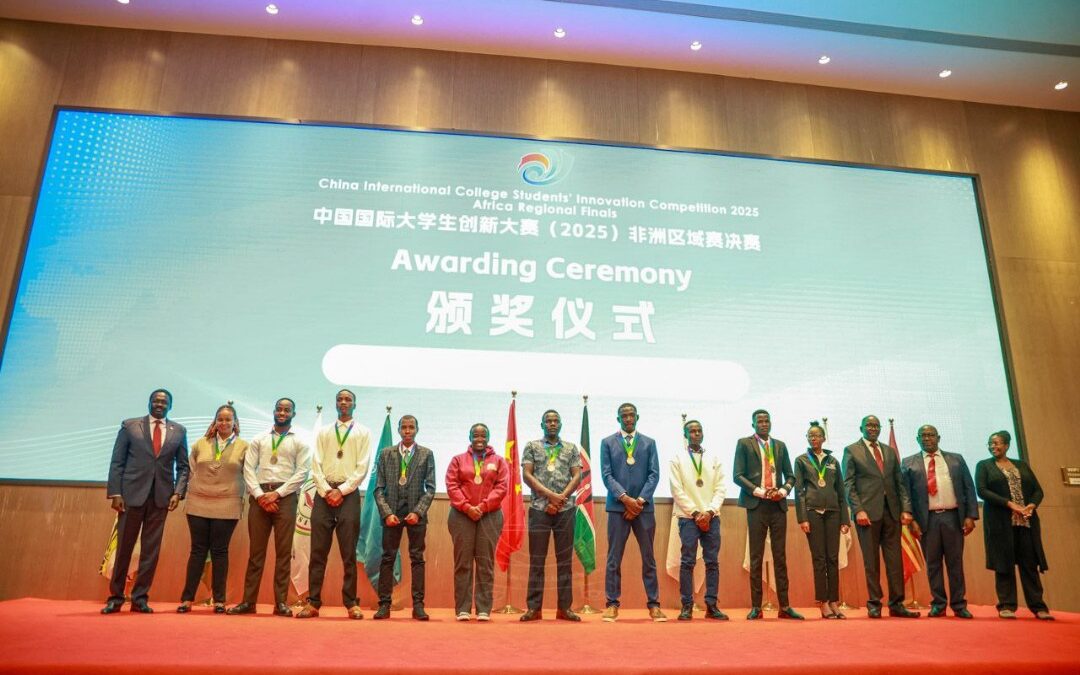
In July 2025, a team from Kwame Nkrumah University of Science and Technology (KNUST) proudly represented the university at the Africa Division Final of the China International College Students’ Innovation Competition (CICSIC), held in Nairobi, Kenya.
The competition, a prestigious global platform celebrating student-led innovation, brought together 30 finalist teams out of 185 projects submitted by 115 universities across the African continent. Organized by the CICSIC Committee, the final event took place from July 24 to July 25, 2025, at the Argyle Grand Hotel, Nairobi, and featured project exhibitions, presentations, and a final awards ceremony.
Representing KNUST were Gabriel Agana Anongwin and Solomon Kennedy Dzramado, with mentorship and guidance provided by Prof. Priscilla Kolibea Mante, PhD. The team’s participation was fully sponsored by the competition organizers.
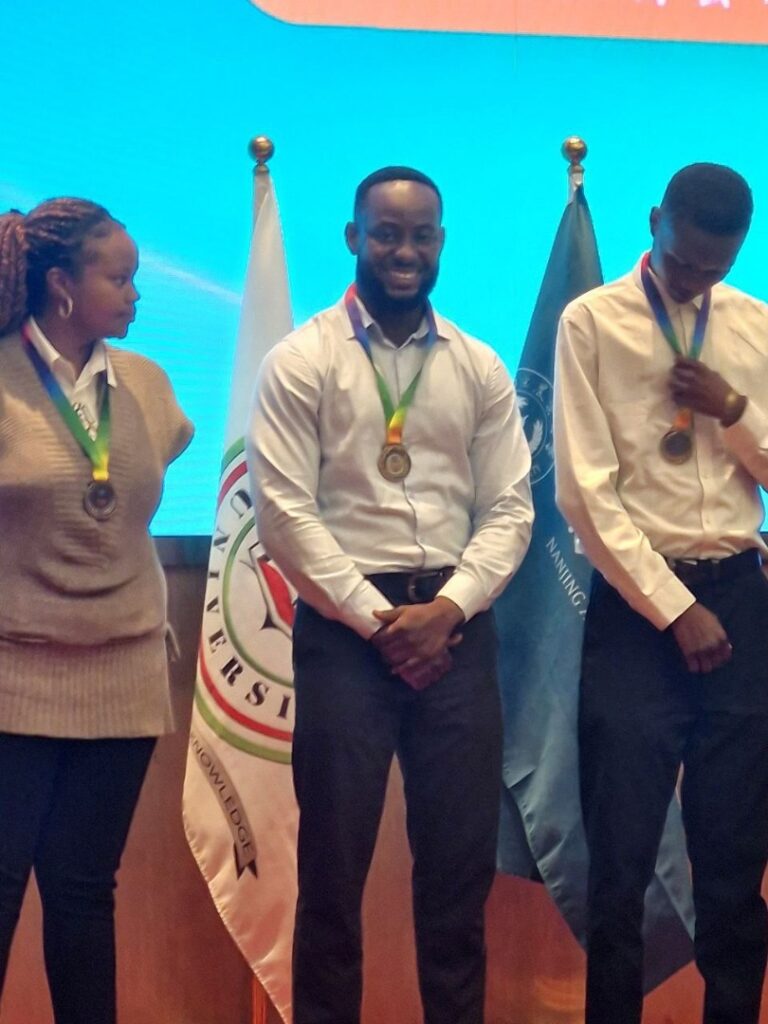
The event began with team registration and orientation on July 24, followed by a final project roadshow and grand award ceremony on July 25. Throughout the competition, students engaged in intellectual exchange, critical feedback sessions, and idea pitching with judges and fellow participants.
The KNUST team presented an innovative project focused on early detection and intervention in chronic kidney disease using machine learning tools. The project aimed to address the rising burden of kidney diseases in low-resource communities by providing a cost-effective and accurate diagnostic solution. Inspired by real-world healthcare gaps and a shared interest in bioinformatics and AI, the project sought to translate technical expertise into practical, lifesaving impact.
Bronze Medal Recognition for KNUST
After an intense and highly competitive showcase of ideas, KNUST’s team was honored with a Bronze Medal, recognizing their project as one of the standout innovations at the competition. This accolade reflects the team’s commitment to impactful problem-solving and highlights KNUST’s growing presence in global innovation spaces.
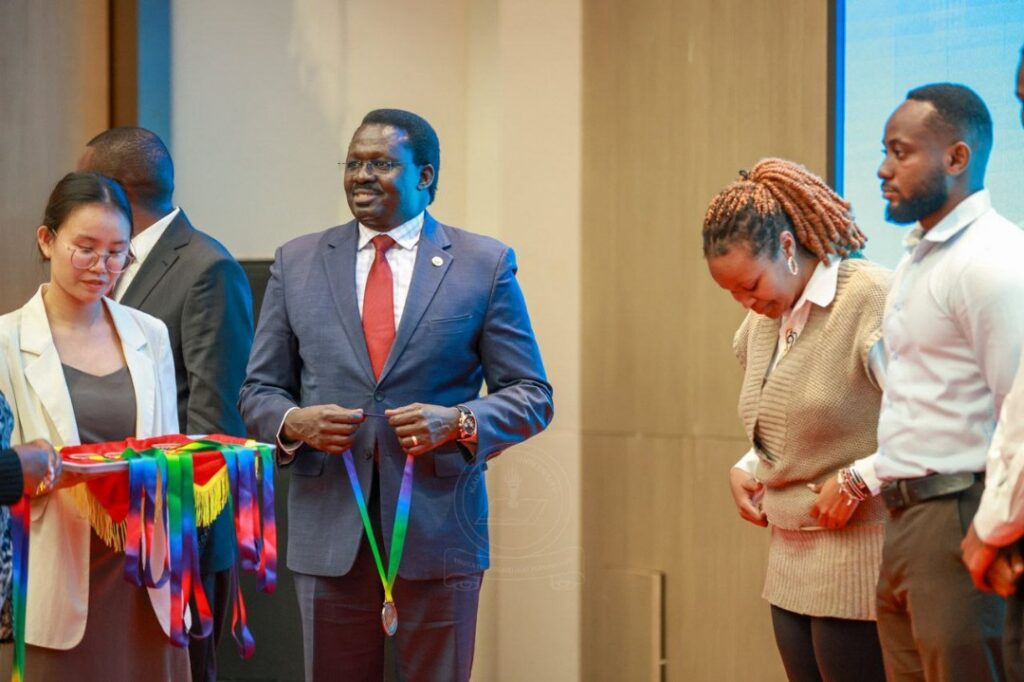
Further Recognition: $5,000 Startup Grant Awarded to Renolab
As a further testament to the project’s potential and impact, Renolab, the start-up founded by Gabriel Agana and built around the same innovation, was selected as a grant beneficiary under the Africa Health Collaborative Project at KNUST. The startup was awarded $5,000 in non-reimbursable seed funding by the MCF Africa Health Collaborative, led by Prof. Ellis Owusu-Dabo, to support business implementation and scale-up activities.
Team members:
Gabriel Agana Anongwin, L500 Doctor of Pharmacy.
Solomon Kennedy Dzramado, L400 Computer Engineering.
Project Overview
Renolab, a health-tech startup focused on helping healthcare professionals detect kidney disease early, especially in remote and underserved communities. Our main target group includes young people aged 15 to 35, but the tool can help anyone at risk of kidney disease. Research shows that people of African descent are about three times more likely to develop kidney disease, yet many are diagnosed too late. We’re building a machine learning model that allows health workers, like those in community pharmacies, health centers, and clinics, to test for kidney problems easily. Instead of relying on the human eye to read color changes on urine test strips (which can be inaccurate), our software uses the phone’s camera and machine learning to analyze the test strip and check for signs of kidney damage, specifically using the albumin-to-creatinine ratio (ACR). This makes it easier, faster, and cheaper to detect kidney issues early, right at the point of care, without needing a lab. The app gives instant results, recommendations, and helps connect patients to further care if needed. Our goal is to make early kidney screening available to more people and prevent serious health problems before it’s too late.