
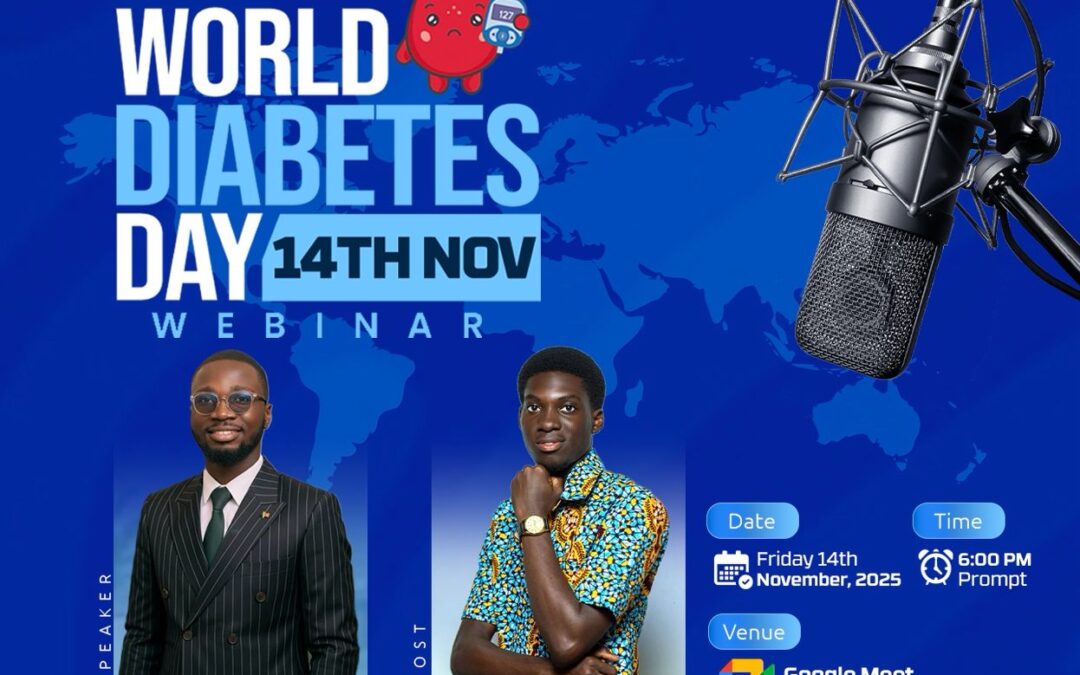
Every year, World Diabetes Day invites the world to pause, reflect and talk honestly about a condition that continues to touch millions of lives. At the Faculty of Pharmacy and Pharmaceutical Sciences (FPPS) here at KNUST, the conversation feels especially relevant not just because we work within the health profession, but because diabetes is no longer a distant disease affecting ‘other people.’ It is right here with us affecting friends, family members, and sometimes even our peers.
Yet, for a condition so common, diabetes remains trapped under layers of misunderstanding. Many people in our communities still believe that diabetes comes from ‘too much sugar,’ as though a few cubes in a cup of tea could switch a disease on or off. Sugar does play a role, but the reality is far more complex. Genetics, lifestyle choices, body weight, diet composition, physical activity, and even stress all weave together into the story of who develops diabetes. The oversimplified
blame on sugar sometimes leads to shame, fear, and misinformation rather than prevention and care.
There is also the misconception that diabetes is a ‘rich person’s disease.’ However, as lifestyles change across Ghana—more sedentary living, fast food culture, and reduced physical activity—the condition is rising among all social classes. Even more heartbreaking is the rising number of young people being diagnosed. Lifestyle-based prevention is possible, yet awareness often arrives too late usually after a diagnosis has already been made.
The truth is that diabetes does not define anyone, and it is not a punishment. It is a medical condition that can be managed with the right information, timely medical care, family support and a society that chooses understanding over stigma. At a place like FPPS-KNUST, where learning, research and innovation shape future health professionals, we share the responsibility of promoting a more informed approach. Whether through educating parents, guiding patients during internships, contributing to research or simply correcting myths in everyday conversations, we play a part in shaping how Ghana responds to diabetes.
World Diabetes Day is not just a date on the calendar. It is a reminder to show compassion, share accurate information and advocate for affordable healthcare. It urges us to learn, to question assumptions and to move beyond old narratives. And most importantly, it pushes us to see the humans behind the diagnosis—the Ghanaians who want healthy, dignified and empowered lives. Diabetes awareness must continue long after this day is over. Our voices, as budding pharmacists and pharmaceutical scientists, are needed not only in lecture halls and laboratories, but in our communities, our homes and our nation’s approach to health.
Reported by:
Sylvester Opoku-Donkor